
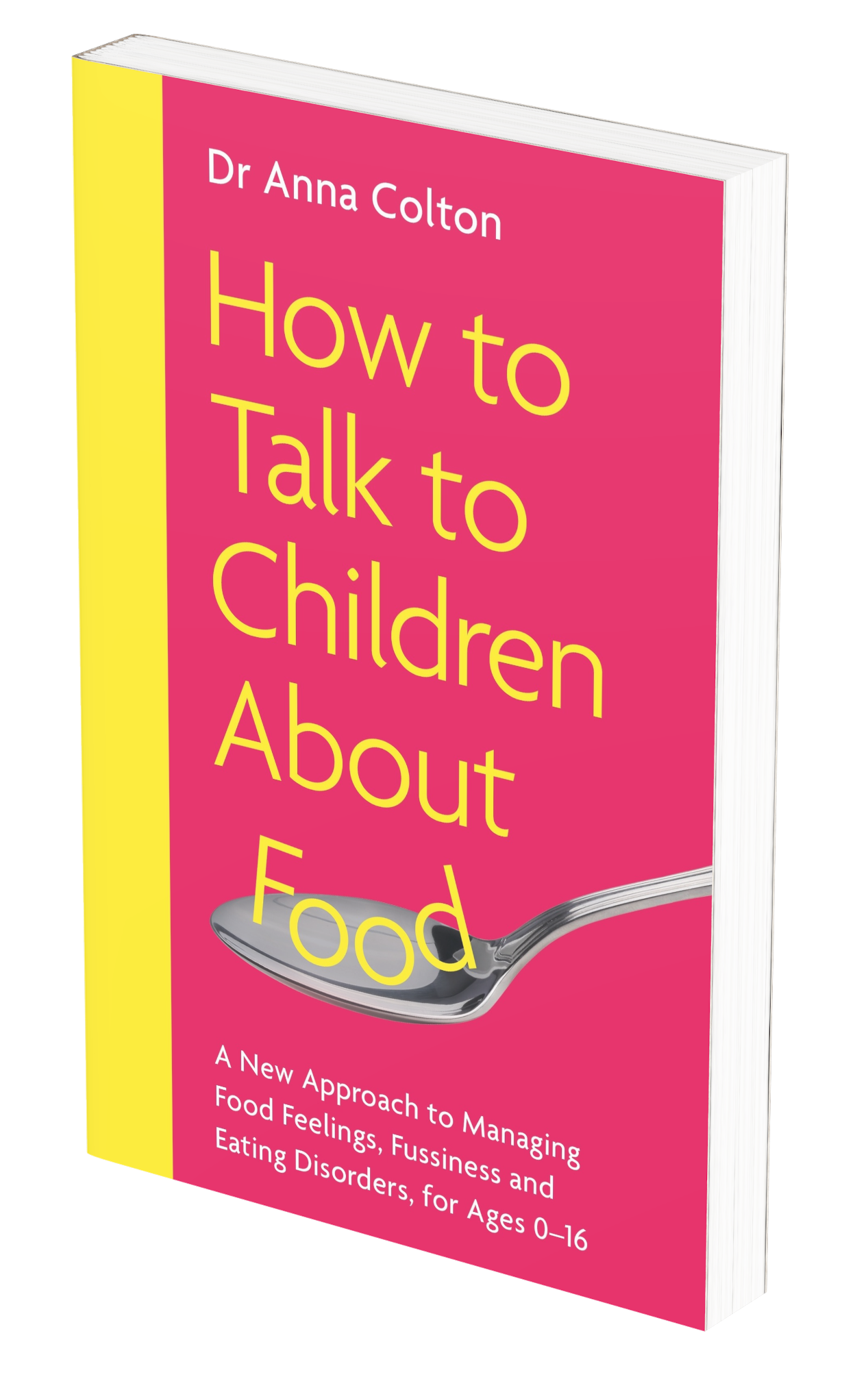
How to talk to children about food
Let’s change the way families talk, think and feel about food.
I wrote How to Talk to Children About Food to give every family - not just those already facing eating disorders - the evidence-based tools to prevent them long before they take hold.
After more than twenty years in this field, I’ve seen the same fears, patterns and pressures repeat across generations, often without anyone noticing. To break that cycle, we have to understand and heal our own relationship with food, so we don’t unknowingly pass those struggles on to our children.
Strategies, scripts and real-world guidance.
Packed with strategies, scripts and real-world guidance, this book shows you how to change the way you speak to yourself, and to the children and teens in your life, about food, bodies and self worth.
What began as a passion project has It’s about breaking the cycle, healing what you’ve inherited, and giving the next generation a different and much better relationship with food which has eating disorder prevention at its core.
Dr Anna on This Morning with Cat Daley and Ben Shepherd talking about the book
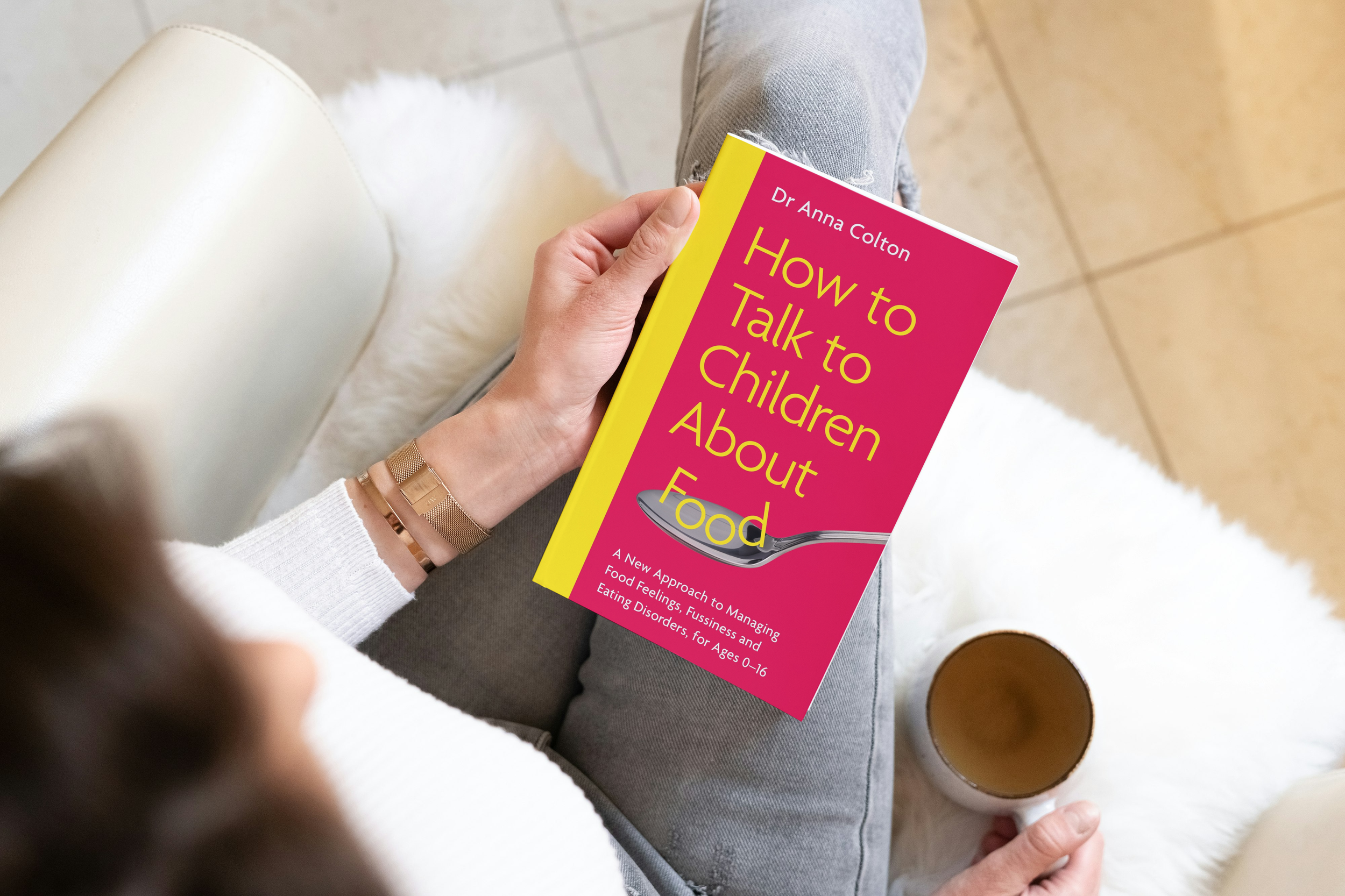
For anyone guiding young people.
A book for everyone: Because unless you heal your relationship with food, you’re destined to pass it on.
Although written with parents and grandparents in mind, this book is for anyone who wants to stop old patterns from shaping themselves and the next generation. It helps you understand where your beliefs about food and bodies came from: which are yours, which you absorbed from your family, and which society (diet culture) insidiously planted.
With practical, evidence-based tools, you’ll learn how to dismantle the unhelpful beliefs you’ve carried for years, keep the ones that serve you, and let go of the rest. You’ll discover how to build a kinder relationship with your body, so you can live in it rather than continually trying to shrink it.

Evidence-based insights you can use straight away.
How to Talk to Children About Food will help you to:
➝ Learn the developmental stages of eating and gain the tools to support children through the ages
➝ Navigate and manage complex food feelings without anxiety, anger or distress
➝ Identify eating disorder behaviours and know when to intervene
➝ Break negative eating cycles and patterns
➝ Build a positive relationship between food and your child/teen's body
➝ Have calm, happy and fuss-free mealtimes for everyone.
“Full of invaluable advice, it gets to the heart of why kids struggle with food and how you can foster healthy habits to prevent future problems with eating and body image.”
- Dr Kirren Schnack, Psychologist and author of Ten Times Calmer
Your questions, answered.
Clear, practical guidance about the book and its approach.
-
This book is about how the words, rules, and emotions around food shape children’s long-term relationship with food. It focuses less on what children eat and more on how to help children create a good relationship with food because that’s what predicts eating difficulties, body image issues, and eating disorders later on.
It is a cry for prevention of eating disorders rather than waiting for them to develop and then desperately find treatment. It takes you from your own relationship with food all the way through from pregnancy to the birth of your child, through their childhood and adolescence.
It’s evidence based throughout and has been described as “one of the best parenting books available” by reviewers and “a book every parent should read” by Dr Kirren Schnack and Zoe Blaskey of Motherkind.
-
This book is for:
Parents of children and teenagers
Parents who feel anxious, confused, or conflicted about food
Parents who are trying not to pass on their own food baggage
Grandparents wanting to support their children and grandchildren
Professionals working with families (psychologists, dietitians, teachers)
You don’t need to be a parent or have a child with an eating disorder for this book to be relevant.
-
No. Absolutely not. It’s not a meal-planner, calorie counter, or “healthy recipe” book.
It’s a psychological guide to:
Reducing food battles
Supporting self-regulation
Preventing disordered eating
Helping children accept and trust their bodies
Nutrition matters, but without the right psychological framework, nutrition advice often backfires.
-
No.
It promotes structure without control, and guidance without fear.
Children need boundaries. They just don’t need:
Moralised food labels
Restriction disguised as health
Control in the name of health
Anxiety around food and their body
The book shows how to have boundaries and limits without increasing obsession, secrecy, or shame.
-
It’s anti-fear.
The book explains:
Why banning foods increases cravings and bingeing
How sugar panic fuels dysregulation
How to talk about health without creating food hierarchy or shame
You’ll still care about nutrition and nourishing your kids, but you’ll be able to do it without emotional charge or value laden language.
-
It pulls together all aspects of attachment, child development, child and adolescent psychology, specialist eating disorder psychology and parenting. Whilst its focus is on food and eating it covers all aspects of parenting and is incredibly broad. It makes complex topics extremely easy to understand and provides practical, evidence based strategies. There is no other book like it.
It explains:
Why children do what they do around food
How adult language shapes children’s internal world
How intergenerational patterns get passed down — and how to stop them
It’s grounded in clinical psychology and science, not trends or diet culture.
-
Yes.
-
Absolutely. Most eating disorders develop in adolescence. The decade of adolescence is one of neurological rewiring, physical, sexual and physiological change. It’s a time when young people need to begin to separate from their family and work out who they want to be (separation and individuation) so that they can become independent adults.
Because of all this, adolescence is a high risk period for:
Body image distress
Dieting
Disordered eating
Emotional eating
The book addresses all of this and explains how parental messaging still matters - even if your teens appear to ignore you. It also helps you spot signs of disordered eating and know how to approach it with your teens.
-
Then this book is especially for you.
The book helps parents understand their own relationship with food, recognise their own triggers, fears, and rules so they don’t get unconsciously handed down to their kids.
-
The book is not a replacement for treatment, but yes, it’s great alongside treatment and is highly relevant for:
Parents supporting a child in recovery
Parents wanting to avoid reinforcing eating-disorder thinking at home
Understanding how well-intended messages can unintentionally maintain difficulties
Many clinicians recommend it alongside therapy.
-
Yes.
It draws on:
Clinical psychology
Eating-disorder research
Attachment theory
Behavioural science
Decades of NHS and private practice experience
There’s no influencer science, no quick fixes, and no scare tactics.
-
In almost all cases, yes. Because food battles are rarely about food. They’re about anxiety, rules, pressure and feelings. Once you find a way around these the battles resolve without effort.
When anxiety reduces so does pressure. And when the pressure lifts the resistance does too.
That’s the aim of the book
-
No! Definitely not. The aim isn’t perfection or ideology. It’s about reflection, understanding, making life way easier around food for you and any children, and in doing so, prevention of eating disorders.
Take what’s useful. Notice what challenges you. And leave the bits that don’t feel they fit.
Podcasts exploring food, families and emotional wellbeing.
Conversations that expand the ideas in the book.
Things People Do
Therapy works
Hurt to Healing
Ready to change the way your family talks about food?
This book gives you the tools to build calm, confident conversations around food, for yourself and your children. Small shifts today can change the patterns your family carries for years.
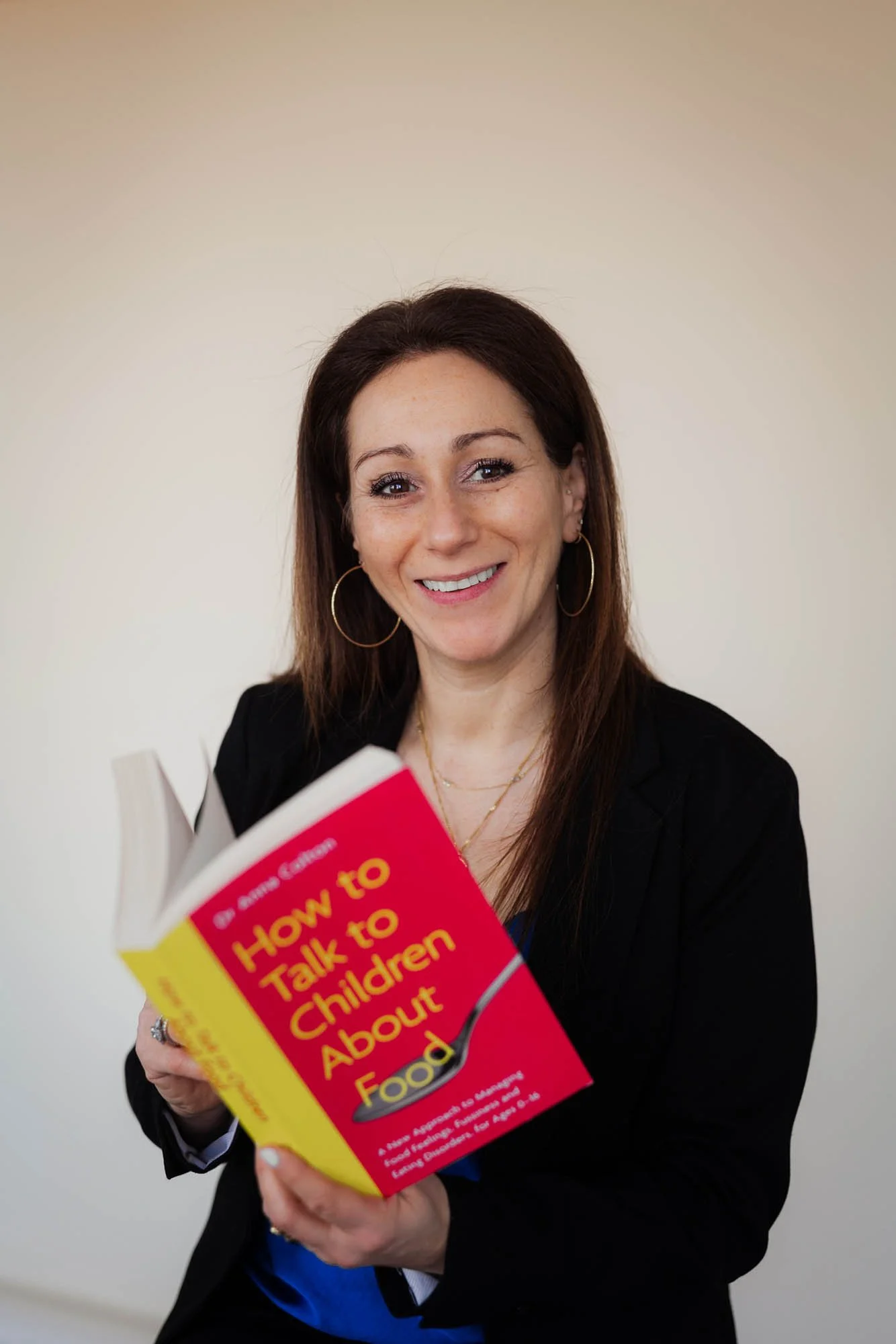
About the author.
Dr Anna Colton is a clinical psychologist, specialising in both adolescence and eating disorders, with over 20 years of experience. Dr Anna worked in the NHS at Great Ormond Street Hospital, Vincent Square eating disorders clinic, The Tavistock Clinic and the Priory Roehampton. She now works exclusively in private practice.
Alongside her clinical practice, Dr Anna can be seen on TV as a mental health expert and behind the camera, advising TV companies, working on reality TV shows and documentaries, supporting contributors and advising production on mental health. She has also worked with BBC Bitesize on their parents' toolkit, on their Mind Set's GCSE campaign, and their body image and social media campaigns. Additionally, Dr Anna works with several West End stage shows, such as Matilda, to help children and adults who are struggling with a range of issues that are affecting their performance, including stage fright and anxiety.